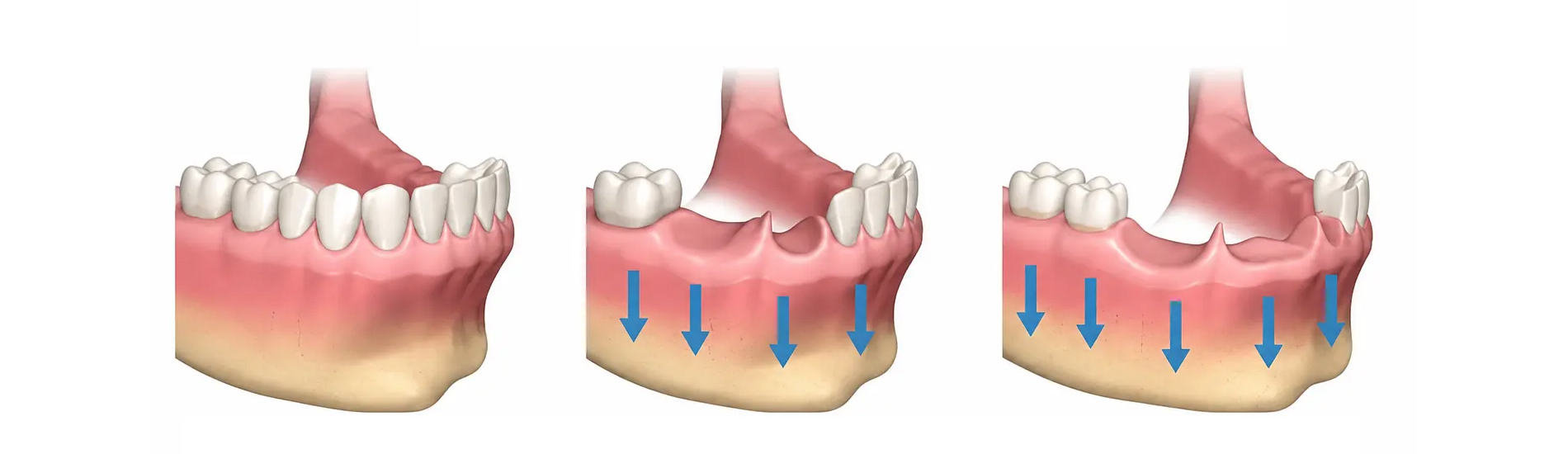
When a tooth is lost, the changes don't stop at the surface of your smile. Underneath
your gums, the jawbone that once supported the tooth can gradually begin to shrink.
This natural process is called bone resorption.
For people who wear dentures, understanding bone resorption can help explain why
dentures that once fit perfectly may eventually feel loose or uncomfortable.
Why Does Bone Resorption Happen?
Your jawbone is constantly responding to the forces placed on it. Natural tooth roots
stimulate the surrounding bone and help maintain its structure. When a tooth is
removed, that stimulation disappears, and the bone can gradually decrease in volume.
Over time, this can change the shape of the jaw and the way your dentures fit.
How Can Bone Loss Affect Dentures?
As the jawbone changes, dentures may become less secure. You might notice that your
dentures move when you chew or speak, or that they cause sore spots on your gums.
Eventually, your dentist may recommend an adjustment, a reline, or a new set of
dentures to restore a comfortable fit.
Significant bone loss can also make some future tooth-replacement options more
complicated. That's why it's worth talking to your dentist about missing teeth sooner
rather than later.
Are Dental Implants an Option?
For some patients, implant-supported dentures can provide greater stability than
traditional removable dentures. Dental implants are placed into the jawbone and can
provide secure attachment points for a denture, helping reduce movement during
everyday activities.
Whether implants, conventional dentures, or another treatment is right for you depends
on your oral health, bone structure, medical history, and personal goals.
At Glenashton Dental in Oakville, we can assess your individual situation and explain
your options. If you're dealing with loose dentures or missing teeth, you don't have to
simply accept discomfort as part of wearing dentures.
Ready to book your appointment? Call our office today at 905-842-5500 to get started!